
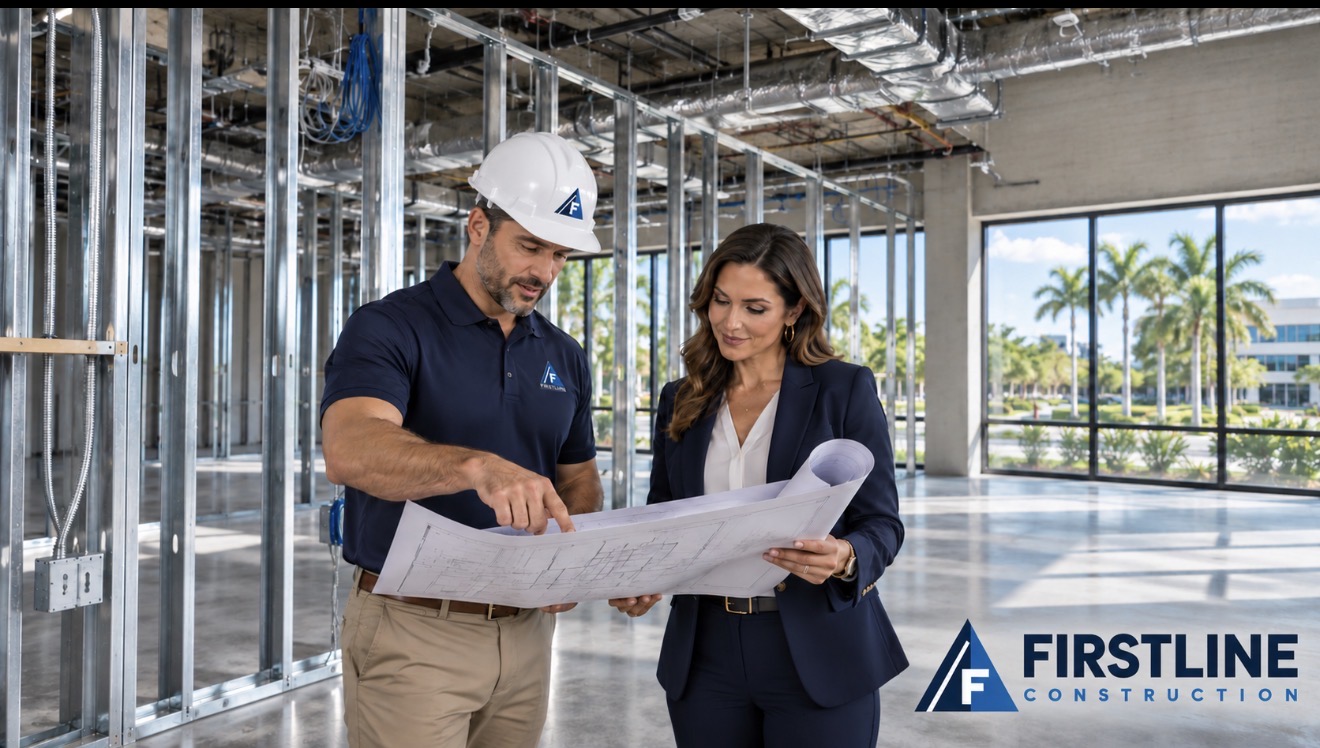
A commercial space can look perfect at first glance. It’s in the right location, the rent fits your budget, and you can already picture your business operating there.
But before you sign the lease, there’s another question worth asking:
Can the space actually accommodate your business—and what will it cost to make it ready?
Whether you’re opening an office, retail store, restaurant, medical practice, or another business in Coral Springs, the construction work needed to make a space usable can have a major impact on your budget and opening date.
A little planning before signing can help you identify potential issues, negotiate with more information, and avoid surprises after you’ve committed.
Here are seven things to consider before signing a commercial lease when a tenant build-out or renovation is involved.
1. Understand What Your Business Needs From the Space
Start with how you intend to use the property, not just how it looks today.
A space that worked for a previous tenant may not be suitable for your business without significant modifications. Even if the square footage is right, the layout and existing building systems might not support your operations.
Consider questions such as:
- How many offices, treatment rooms, restrooms, or work areas do you need?
- Will customers or clients visit the space?
- Do you need a reception area, storage, or a break room?
- Will your equipment require additional electrical capacity or plumbing?
- Will you need to modify walls, doors, or the ceiling?
- Is the space intended to be used the same way it was by the previous tenant?
For example, converting a general office into a medical practice can involve a very different scope of work than refreshing an existing office for another professional services company.
The takeaway: Before falling in love with a space, confirm that it can reasonably be adapted to your business and budget.
2. Don’t Assume the Existing Systems Will Meet Your Needs
Some of the most expensive build-out issues aren’t immediately visible during a walkthrough.
The existing electrical, plumbing, heating and cooling, fire protection, and other building systems should be evaluated against the needs of your proposed business.
For example, a space may need:
- Additional outlets or dedicated circuits
- Changes to the electrical panel or service
- New plumbing connections or restrooms
- Heating and cooling modifications
- Fire alarm or sprinkler adjustments
- Improved ventilation for specialized equipment or operations
The extent of work will depend on the space, the existing systems, and how you plan to use it. A contractor can help identify items that warrant further evaluation by the appropriate design professionals or licensed trades.
A space with a lower monthly rent may become much more expensive if it requires substantial building system upgrades.
3. Find Out What the Landlord Will—and Won’t—Provide
Commercial spaces are delivered in different conditions. Some are mostly finished, while others may be substantially unfinished and require a more extensive build-out.
Before signing, make sure you understand the condition in which the landlord will deliver the premises and who is responsible for any required work.
Items to clarify include:
- Existing walls, ceilings, flooring, and finishes
- Electrical, plumbing, and HVAC systems
- Restrooms and accessibility features
- Fire protection systems
- Roof or building envelope issues that could affect the space
- Repairs needed before construction begins
It’s also important to determine whether the landlord must approve your plans, contractor, subcontractors, working hours, or material deliveries.
Get these details documented in the lease and related agreements. A general contractor can help you understand the construction scope, while your attorney can help you review the lease language and responsibilities.
4. Understand Your Tenant Improvement Allowance
Some landlords offer a tenant improvement allowance, often called a TI allowance, to help pay for improvements to the space.
An allowance can be helpful, but it doesn’t necessarily mean all your construction costs are covered.
Before relying on the allowance, find out:
- How much is available?
- What costs qualify?
- Can it be used for architectural and engineering fees?
- Does it cover permits, inspections, and utility-related costs?
- Is it paid directly to contractors or reimbursed to you?
- When will the funds be released?
- What happens if the project costs more than the allowance?
For example, if a landlord offers an allowance of $40 per square foot, that number alone doesn’t tell you whether it will cover your build-out. The answer depends on the condition of the space, your design, the work required, and the costs included in the agreement.
A preliminary construction budget can help you understand whether the allowance is realistic before you commit.
5. Plan for Permits, Design, and Approvals
A commercial build-out may require more than a contractor and a start date.
Depending on the project, you may need architectural or engineering plans, building permits, trade permits, inspections, and approvals from other agencies. Certain uses may also involve additional reviews.
For projects in Coral Springs, the city’s commercial permitting checklist provides a starting point for understanding potential submission requirements. The city notes that its checklist is not all-inclusive, so requirements should be confirmed for the specific project.
If you’re considering a space, involve your contractor and design team early enough to identify likely requirements before finalizing your schedule.
Planning tip: Ask about the process before making promises to customers or setting a firm grand opening date.
6. Build a Realistic Timeline Before You Set an Opening Date
One of the biggest mistakes a business owner can make is assuming construction begins as soon as the lease is signed.
Before work starts, the project may need to go through design, landlord review, permitting, and other approvals. Materials or equipment may also need to be ordered in advance.
Your overall timeline may include:
- Evaluating the space and defining the scope
- Preparing construction plans and a budget
- Obtaining landlord and agency approvals
- Applying for permits
- Ordering materials and equipment
- Completing construction and inspections
- Obtaining the approvals needed to occupy or open the space
Every project is different, and timelines can change depending on the complexity of the work and the review process.
It’s also worth discussing when rent begins and whether the lease provides time for design, permitting, and construction. Your attorney or commercial real estate professional can help you evaluate those terms.
7. Bring Your Contractor In Before You Sign
Many tenants wait until after they sign a lease to speak with a general contractor. By then, they may already be committed to a space that requires more work than expected.
An early walkthrough gives you an opportunity to discuss your plans, identify visible concerns, and understand what additional information may be needed.
A contractor can help you consider:
- Whether the proposed layout is practical
- What construction work may be required
- Which existing conditions need further investigation
- Potential budget and schedule concerns
- Coordination with architects, engineers, and licensed trades
Early input can also help you ask better questions during lease negotiations.
At FirstLine Construction Corp., we work with property owners and businesses on commercial construction and project management, helping bring the pieces of a project together from planning through construction.
Frequently Asked Questions About Commercial Build-Outs
What is a tenant build-out?
A tenant build-out is construction or renovation work performed to prepare a commercial space for a tenant’s specific business needs. It can range from reconfiguring an existing office to completing a substantially unfinished space.
Do I need a permit for a commercial build-out in Coral Springs?
Many commercial alterations require permits, but the requirements depend on the work and the property. Check with the Coral Springs Building Department and your project team before construction begins.
Who pays for a commercial tenant build-out?
It depends on the lease and the agreement between the landlord and tenant. The tenant may pay for the work, the landlord may provide an allowance or complete certain improvements, or the parties may agree to another arrangement. Review the details with your attorney before signing.
How much does a tenant build-out cost?
There is no single price that applies to every project. Costs vary based on the size and condition of the space, the intended use, design requirements, materials, building systems, and scope of work.
The best way to understand potential costs is to define your needs and have the space evaluated before committing to the project.
Can FirstLine help before I sign a lease?
Yes. If you’re considering a commercial space, FirstLine can discuss your construction goals, review the proposed scope, and help you identify construction-related considerations to investigate before moving forward.
Planning a Commercial Build-Out in Coral Springs?
The right location is important, but understanding what it will take to make the space work for your business is just as important.
Whether you’re preparing to lease your first space, expand your business, or renovate an existing property, FirstLine Construction Corp. can help you plan your project with the bigger picture in mind.
We provide commercial construction and project management services in Coral Springs, throughout Broward and Palm Beach counties, and across Florida.
Call FirstLine Construction Corp. at 954-282-5224 to discuss your project.
Florida General Contractor License: CGC1530039
Florida Roofing Contractor License: CCC1334142
Leave a Reply